


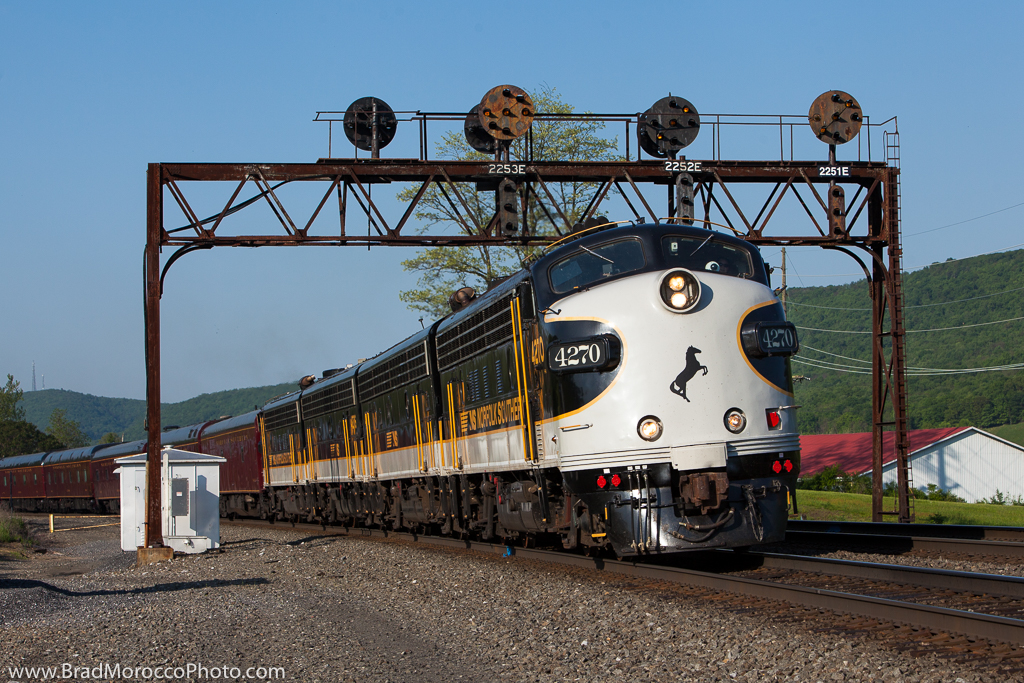
So for all intents and purposes, I am a nerd. I like model trains, and real trains. I’m fascinated by the historical significance of them, how the technology is constantly evolving, and how the topic brings a lot of people together. I love model trains because it shows a person’s creative side. How far are they willing to push the limits of a miniature world and make it as realistic as possible.
This design philosophy is carried over into something I discovered a year ago. It’s called Free-mo. What that means, is instead of building a massive train layout, you would create one that’s very small. My original vision for creating a layout was one that would require more space than my parents would be okay with letting me have, so this was a more reasonable choice.
Free-mo is a term for a specific type of modular model railroading. If you’ve ever been to a train show and seen any model train displays that have little lines between them, that means the layout is “modular.” This means that the layout is cut into multiple sections so it can be moved around.
Free-mo expands on this idea, with modules built to a standard. You may ask why it would matter to build a home layout to a standard. Well, Free-mo modules are not exclusively home layouts.
The real magic happens when you put these modules together. Instead of having a small layout, you now can put these modules side by side to create a massive model railroad. I found this to be an incredible thing that shows the creativity of making a layout in a small space, but also showing the power of people coming together.
I took to my local Free-mo group and asked my fellow group members if I could submit a location for them to hold a show. They said yes, and then the next step was to get the space approved. As a student of Arcadia University, I noticed that events were a common occurrence and said “fuck it, how hard is this?”
Well, as it turns out, it definitely wasn’t easy.
I was given an email list of who to talk to, and after narrowing down what spaces I could hold the event, it came to the issue of money. It would cost multiple thousands of dollars to use a space for just one day.
However, I’m a stubborn S.O.B., and pressed on. I have a friend who used to be president of the commuter lounge, and he gave me the email of the person who coordinates events for that space with the commuter students.
I thought “well if the event is held on Saturday or Sunday and the students aren’t there unless it’s Monday to Friday, it should be fine.”
The plans I had made fell through, and no further discussion was had. So, that idea sounded way better in my head.
Featured image by Hunter Morris.


